



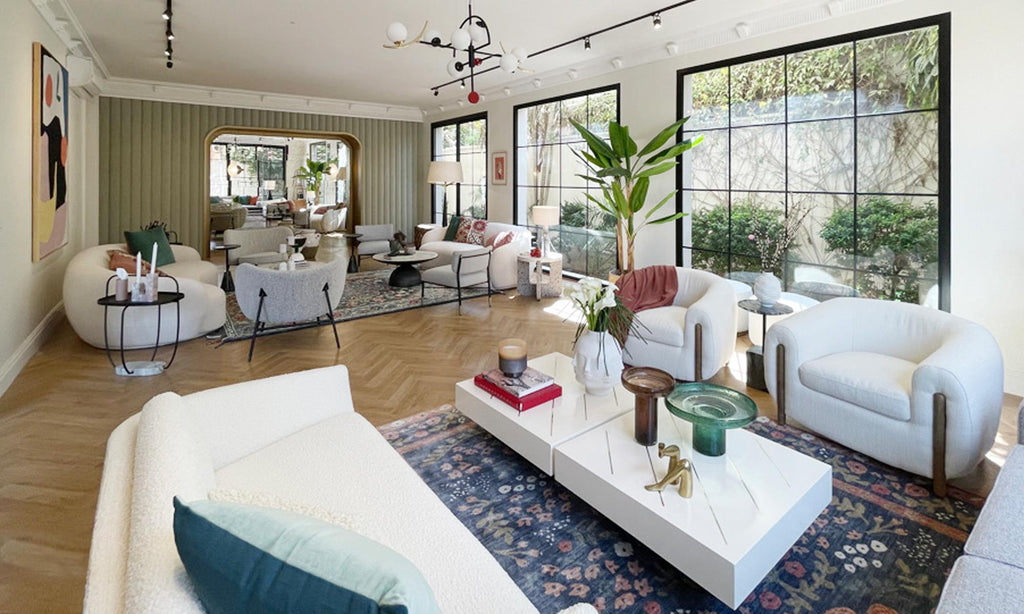
Majlis Furniture Guide for Saudi Homes | Seating, Layout & Style
A Majlis That Welcomes Guests and Still Works Every Day
In a Saudi home, the majlis is not just another living room. It is where guests are received, where coffee is served, where conversations stretch long after the meal, and where first impressions of the home are formed. A good majlis feels generous, ordered and calm the moment someone walks in - and it stays comfortable when ten guests arrive instead of four.
Quick answer — what furniture does a majlis need? Face-to-face seating for 8–12 guests (allow 60–70 cm of seat width per person), a low central coffee table with 90–120 cm between opposing seats, side tables within reach of every seat, a large low-pile rug under the front legs of the seating, and warm, dimmable lighting. Choose tightly woven fabric in a warm mid-tone — it handles Saudi dust and daily coffee best.
This guide gives you the order that works: seating first, layout second, tables and serving pieces third, then light, rug and finishing touches. It covers both the traditional majlis, where seating runs along the walls, and the modern majlis, built around sofas and armchairs - and how to choose between them for a villa in Riyadh, an apartment in Jeddah, or a family home anywhere in Saudi Arabia.
Step 1: Choose the majlis style - traditional, modern, or a mix
Traditional wall seating. Low, continuous seating along two or three walls, with cushions and bolsters. This seats the most people in the smallest footprint, keeps the centre of the room open for serving, and suits large family gatherings. Choose it if you host often, if the room is long and narrow, or if elders and large groups are your usual guests.
Modern sofa majlis. Sofas and accent chairs facing each other, much like a formal living room. This feels more relaxed, suits open-plan homes, and works better when the majlis doubles as a family sitting room. Choose it if the room is square, if you want a TV or fireplace as a focal point, or if you prefer upright, supported seating.
The mix most Saudi homes actually live with. Wall seating on the main wall for capacity, plus two armchairs or a small sofa facing it for conversation. This gives you the generosity of a traditional majlis without making the room feel like a waiting hall on ordinary days.
Whichever style you choose, keep one rule: every seat must have a clear path to the door and to the serving area. A guest should never have to climb over another guest to leave.
Step 2: Get the seating right - height, depth and numbers
Comfort in a majlis is measured in hours, not minutes. Arabic coffee, dates, conversation and a second round of coffee can keep guests seated for a long time, so test seating for support, not just looks.
- Seat height: upright sofa and chair seating should be around 45–48 cm, so older guests can stand up easily. Low traditional seating should still have firm, thick cushions — soft cushions that sink to the floor are tiring after half an hour.
- Seat depth: around 55–60 cm suits upright conversation; deeper seats suit lounging but make formal sitting harder.
- Back support: a firm back, or firm bolsters behind cushions, matters more than extra softness. Guests sit upright in a majlis; they do not lounge the way they do in a family room.
-
Numbers: plan for your regular gathering, then add a plan for overflow. Two matching accent chairs stored in another room, or a bench that can be brought in, are better than squeezing extra chairs into a full majlis every time.
Browse the sofas and chairs in the RIS furniture collection and sit in them, if you can visit the Jeddah showroom, before you commit to a full set.
Step 3: Lay the room out for conversation and serving
The classic mistake is pushing everything against the walls and leaving a dead centre. A majlis needs a centre that works.
- Face seats toward each other, not toward a wall. Conversation is the point of the room. In a sofa majlis, place two sofas or a sofa and two chairs opposite each other, with 90–120 cm between them for a coffee table and for serving.
- Keep the serving path clear. The host, or the person serving coffee, needs a straight, unblocked route from the door to every seat. Do not put a heavy coffee table where it blocks that route.
- Leave 75–90 cm of walkway behind chairs and around tables. Guests in thobes and abayas need real turning space, not a narrow gap.
- One focal wall, not four competing walls. Choose the wall for the main seating, artwork or feature, and keep the other walls quieter. A room with four statement walls feels busy; a room with one feels designed.
Step 4: Tables, serving pieces and the coffee ritual
A majlis lives or dies by its serving layer. The coffee set, dates and sweets need a home that is not
the guest's lap.
- A central coffee table at about the same height as the seat cushions, or slightly lower, so cups can be set down without reaching. Marble, travertine or stone tops suit a majlis: they handle hot cups, heavy trays and daily wiping.
- Side tables at the ends of the seating, so the farthest guest is never without a place for a cup.
- A serving console or sideboard near the door, for the dallah, cups, dates and sweets before they are served. This keeps the main table clear for conversation.
- A tray for each seating group in a large majlis, so coffee can be served to one group without disturbing another.
Choose coffee tables and side tables from the RIS collections in a material that answers the seating - stone with fabric sofas, warm wood with leather or darker upholstery - rather than matching everything exactly.
Step 5: Rug, light and colour for a majlis
Rug: a large rug anchors a majlis and makes it feel finished. It should sit under the front legs of all the main seating, not float in the middle. A low-pile, easy-to-clean rug is the practical choice where coffee is served daily; a thick pile rug is beautiful but harder to keep clean.
Light: warm light, always. A central chandelier or statement pendant gives the room its formality in the evening, with wall lights or table lamps for softer light after the main gathering. Put the main light on a dimmer if you can - full light for arrival, softer light for long conversation.
Colour: majlis colours in Saudi homes tend to be warm and grounded: beige, greige, sand and taupe as the base, with one deeper accent - emerald, burgundy, navy or forest green - in cushions, curtains or artwork. Light, pure-white upholstery looks striking in a photograph but shows dust and coffee marks fast in daily use; a warm mid-tone is the wiser choice for a room that hosts often.
5 majlis mistakes to avoid
-
Seating for a photograph, not for guests — beautiful chairs that no one can sit in for an hour will empty the room.
-
A blocked serving path — if coffee cannot reach every seat easily, the room is not working, however good it looks.
-
Too many patterns — one pattern in cushions, one in the rug, and plain fabric elsewhere. More than that reads as noise.
-
Harsh, cold lighting — a majlis at full white light feels like an office. Warm light and a dimmer change the whole room.
-
No overflow plan — buy or keep two extra seats from the start. Guest numbers in Saudi family life always grow.
Frequently asked questions
What furniture does a majlis need?
A majlis needs comfortable seating for your regular guest list, a central coffee table, side tables at the ends of the seating, a serving console or sideboard near the door, a rug large enough to sit under the front legs of the seating, and warm lighting. Cushions, a coffee set and a low centrepiece finish the room.
Is a traditional or modern majlis better for a Saudi home?
Neither is better in itself. A traditional wall-seating majlis seats more people in a smaller room and suits large, frequent gatherings. A modern sofa majlis suits square rooms, open-plan homes and rooms that double as family space. Many Saudi homes use a mix: wall seating on the main wall, plus armchairs facing it.
How many people should a majlis seat?
Seat for the gathering you host regularly, not the largest one you hosted once. For most Saudi family homes that means 8–12 seats as a base, with two extra chairs kept in another room for bigger nights. Allow about 60–70 cm of seat width per person on a sofa or bench.
What is the best fabric for majlis seating in Saudi Arabia?
Tightly woven fabric in a warm mid-tone — beige, greige, sand, taupe or olive — handles dust and daily use best. Deeper colours such as emerald, burgundy or navy suit formal majlis rooms and hide marks well. Avoid pure white in a room where Arabic coffee is served daily, unless the covers are removable and washable.
How should majlis seating be arranged?
Face seats toward each other for conversation, with 90–120 cm between opposing seats for a coffee table and serving. Keep a clear serving path from the door to every seat, and leave 75–90 cm of walkway behind chairs. The open side of the arrangement should face the entrance, so the room reads as welcoming when you walk in.
What size rug do I need for a majlis?
The rug should be large enough to sit under the front legs of all the main seating, with at least 20–30 cm of rug showing beyond the seating on the open side. A rug that only sits under the coffee table looks too small and will move underfoot. Choose a low-pile weave where coffee is served often, so it is easy to clean.
What lighting is best for a majlis?
Warm lighting is best. Use a central chandelier or statement pendant for formality, plus wall lights or table lamps for softer evening light. A dimmer is worth adding: full light when guests arrive, softer light for long conversation afterwards. Avoid cold white light, which makes a majlis feel harsh.
Should a majlis have a TV?
It depends on how the room is used. A dedicated guest majlis usually works better without a TV, so conversation stays the focus. If the majlis doubles as a family room, a TV on a side wall - not as the main focal point — is a sensible compromise. Do not let the TV dictate the seating layout in a guest majlis.
How do I make a small majlis feel bigger?
Use lighter wall colours, one large rug instead of several small ones, seating with visible legs rather than a solid base, and a large mirror on one wall. Keep the centre of the room open, avoid oversized furniture, and use two accent colours at most. A compact sofa majlis usually feels larger than wall-to-wall seating in a small apartment majlis.
Where can I buy majlis furniture in Saudi Arabia?
You can buy majlis seating, coffee tables, side tables, rugs and lighting online from RIS at ris.co, with collections for sofas, chairs and home décor, and in the RIS showrooms in Jeddah. Check the best sellers to see what other Saudi homes chose first, and confirm dimensions and delivery details on the product page before ordering.
What is the difference between a majlis and a living room?
A majlis is a dedicated room for receiving guests: seating is arranged face-to-face around the walls, the mood is more formal, and serving coffee and dates is built into the layout. A living room is the family's daily space, arranged around comfort and usually a TV. Many Saudi homes keep both — a majlis for guests and a family room for everyday life — while smaller homes combine them with sofa seating that can serve both roles.
What coffee table is best for a majlis?
A low, wide coffee table — about 35–45 cm high — works best, large enough to hold the dallah, cups and dates for every seat without guests stretching. A marble or stone top is the practical luxury choice because it wipes clean after coffee service. Add small side tables at the ends of the seating so no guest is far from a surface.
How do I keep majlis furniture looking new with daily dust and coffee?
Choose tightly woven fabrics in warm mid-tones that hide dust, vacuum the seating weekly with a soft brush, and blot coffee spills immediately — never rub. Removable, washable covers are a real advantage in a majlis used daily. Our sofa fabric guide compares velvet, bouclé, linen and performance fabrics for exactly this use.
How much space do I need for a majlis?
A room of about 4 × 5 m seats 8–10 guests comfortably: seating about 90–100 cm deep along the walls, a 90–120 cm centre space for the coffee table and serving, and a 75–90 cm walkway. In a smaller room, a compact sofa majlis on two walls seats 6–8 without crowding. Measure the room before choosing the seating style — wall seating needs length, a sofa majlis needs corner space.
A room built for guests, kept for family
A great majlis is decided before the first guest arrives: seating that respects a long visit, a clear path for coffee, a table that serves everyone, and light that flatters the room in the evening. Build it in that order from the RIS furniture collection, and the room will do the rest - for Eid, for Ramadan, and for an ordinary evening when a friend drops by.
