



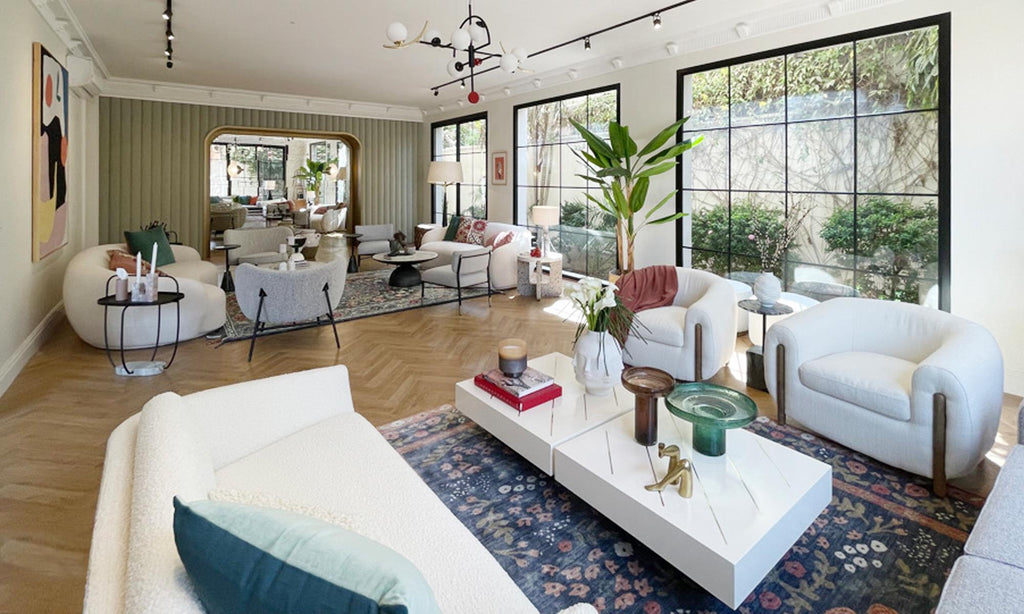
Statement Lighting and Its Role in Saudi Home Interiors
Lighting influences how rooms are experienced and used. Beyond illumination, lighting fixtures contribute to the visual structure of interior spaces.
In Saudi homes, where rooms often have high ceilings and large open areas, selecting suitable lighting fixtures is essential for balance and functionality.
Chandeliers as Central Fixtures
Ceiling fixtures often serve as the main visual element in reception areas and dining rooms. Proper scale selection ensures the fixture fills vertical space without overwhelming the room.
Glass and metal finishes help distribute light evenly while complementing materials such as stone, wood, and fabric furniture.
Warm-toned lighting is commonly preferred in dining areas as it supports comfortable visibility during meals.
Importance of Layered Lighting
Rooms should not rely on a single light source. Lighting is most effective when distributed across multiple levels:
• Ceiling lighting for general illumination
• Table lamps for task lighting
• Wall fixtures for ambient support
This layered approach reduces harsh shadows and improves comfort throughout the space.
Wall Fixtures as Decorative Lighting
Wall lamps function as both lighting and decorative elements. Installed beside artwork or mirrors, they add vertical rhythm while providing additional illumination.
Fixtures incorporating stone or metal materials help connect lighting with surrounding furniture finishes.
Table Lamps for Localized Lighting
In large seating areas, ceiling lights alone may not provide sufficient lighting at seating level. Table lamps introduce localized illumination suitable for conversation or reading.
Placed on side tables, they also contribute to the overall composition of the room.
Lighting and Daily Use
Lighting should adapt to daily activities, from daytime gatherings to evening hospitality.
Well-distributed lighting improves comfort and visibility while maintaining the intended atmosphere of the space.
