



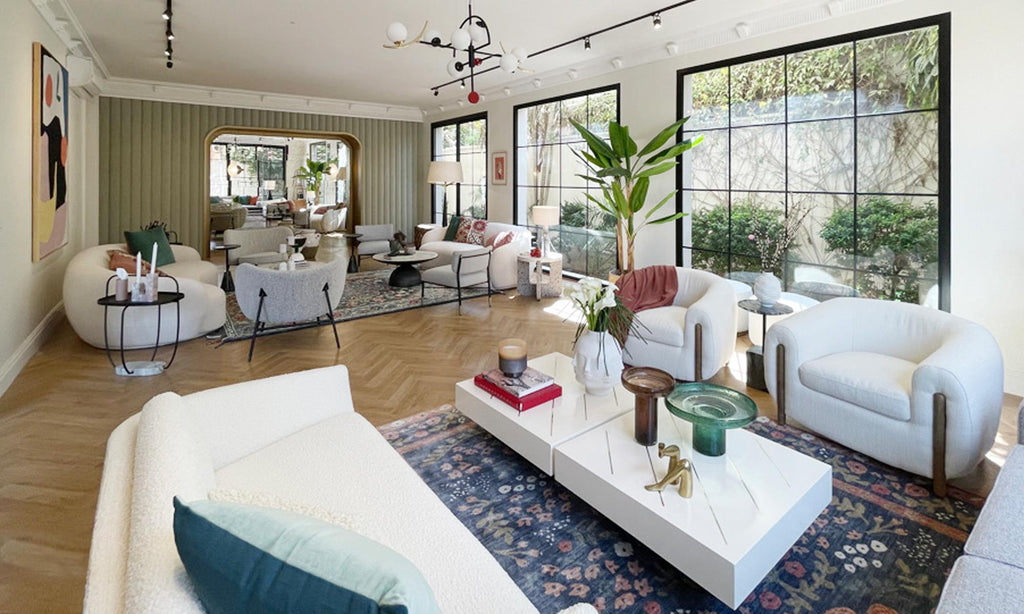
Dining


The dining room in Saudi Arabia — dining is where Saudi hospitality lives: family lunches, guest dinners and coffee served with dates. At RIS you will find everything around the table, from elegant mugs and coloured drinking glasses to carafes and cake stands, alongside the dining tables and dining chairs they belong with. This is dining as an experience, not just a meal.
Read more
It Starts With the Table, Then the Setting
A beautiful table setting cannot rescue the wrong table, and a great table deserves a setting that honours it. Choose the table for your room and your guests first — our dining table guide covers sizes for six, eight and ten people — then build the setting in layers: tableware, glassware, serveware, and one centrepiece. Each layer should be simpler than the one below it, so the table reads as calm and refined, not busy.
Setting a Luxury Table
- Tableware first — plates and serving pieces in one colour family; white and warm neutrals make food look its best.
- Glassware with personality — coloured glasses in green, pink or amber turn plain water into part of the design, and a matching carafe keeps the table self-sufficient.
- Serveware at the centre — cake stands and serving platters give height and ceremony to desserts and fruit.
- One centrepiece only — a vase or a row of candles, low enough that guests can see each other across the table.
Hosting, Saudi Style
In Saudi homes, the meal begins before the food: the dallah of Arabic coffee, a plate of dates, and water for every guest. Keep a carafe and glasses within reach so nobody waits, serve coffee in small cups and refill them as the custom of generosity requires, and let the tableware be elegant but unpretentious — guests relax when nothing feels too precious to use. Finish with tea or dessert served on a stand, and the table has told the whole story of the evening.
Caring for Glass and Serveware
Wash coloured glass by hand in lukewarm water with mild soap — dishwashers dull delicate colours and gold details over time. Dry glasses upside down on a soft cloth, then polish with a lint-free towel so no water spots remain. Store cake stands and platters away from direct sun, and stack plates with a soft layer between them if they carry painted or metallic decoration.
Delivery Across Saudi Arabia
RIS delivers dining pieces across Saudi Arabia, with free delivery in main cities on orders of 2,500 SAR or more. Glass and ceramic pieces are packed with extra protection, and you can see the colours in person at our Jeddah showroom.
Frequently Asked Questions
How do I set a dining table for guests?
Set a dining table in layers: a plate at each seat, cutlery beside it, the glass above the plate to the right, and serveware in the centre. Give each guest about 60 cm of table width so elbows and serving dishes never collide. Add one low centrepiece, and keep a carafe of water on the table so no guest waits for a refill.
What do I need for a complete dining table setting?
A complete dining table setting needs dinner plates, side plates, cutlery, drinking glasses, a water carafe, serving platters and a cake stand — together these cover almost every meal. Add candles or a small vase as the single centrepiece. For Saudi hosting, also keep a dallah, finjan cups and a plate of dates ready, because coffee and dates open and close the meal.
Are coloured drinking glasses practical for daily use?
Yes, coloured drinking glasses are practical for daily use if you wash them by hand and keep them out of the dishwasher. Colours such as green, amber and pink hide everyday water marks better than plain glass and make a simple family lunch feel considered. Wash in lukewarm water with mild soap, and dry at once with a lint-free towel to prevent spotting.
How many glasses do I need per guest?
Plan one water glass per guest as the minimum, and add a second glass when you serve juice or a special drink alongside it. For hosting, set out a few spare glasses and a second carafe as well — Saudi hospitality runs on refills, and a guest should never sit with an empty glass. Keep the carafe on the table so refills need no trip to the kitchen.
How do I host with Arabic coffee and dates?
Serve Arabic coffee from a dallah in small finjan cups, filled only about one-third, alongside a plate of good dates and a glass of water for each guest. Offer the coffee before the meal to welcome your guests and again after dessert, and keep refilling each cup while the guest accepts. This trio — coffee, dates and water — is the heart of the Saudi welcome.
What size dining table do I need?
Choose your dining table by allowing about 60 cm of table width per person: roughly 180–200 cm seats six people, 220–240 cm seats eight, and 280–300 cm seats ten. Leave at least 90 cm of clear space around the table so chairs pull out and guests move freely. If your room is tight, measure the clearance first — it matters more than the table itself.
How do I clean coloured glass without fading it?
Wash coloured glass by hand in lukewarm water with a drop of mild soap and a soft sponge, then dry it immediately with a lint-free towel. Avoid the dishwasher, very hot water and abrasive pads — heat and harsh detergents are what dull the colour and strip metallic details over time. Store glasses upright and not touching, so the rims never chip.
What centrepiece suits a dining table?
The best dining table centrepiece is low and elegant: a row of candles, a small vase with greenery, or a cake stand holding fruit. Keep it below the eye level of seated guests so conversation flows straight across the table. Choose only one centrepiece — a single calm focal point looks luxurious, while several competing pieces make the table feel crowded.
Do you deliver dining and glassware outside Riyadh?
Yes, RIS delivers dining pieces and glassware to all regions of Saudi Arabia, and delivery is free in main cities on orders of 2,500 SAR or more. Glass and ceramic items are packed with extra protection so they arrive safely. You can also see the colours in real light at our Jeddah showroom before you order.
What dining pieces make a good wedding gift?
A set of coloured glasses with a matching carafe, or a cake stand with serving platters, makes an elegant and genuinely useful wedding gift. Choose warm neutrals or one soft colour — they join almost any table the couple already owns. Serving pieces are used from the very first hosted dinner, so the gift earns its place immediately.
How do I mix tableware colours without clashing?
Keep the plates in one calm family — white or warm neutral — and let the colour live in the glasses and serveware. One colour repeated across the table looks deliberate and designed; many colours competing at once look accidental. Repeat the glass colour once more, in the napkins or the centrepiece, to tie the whole setting together.
Can I see the glassware colours in person?
Yes — visit our Jeddah showroom to see the glass colours in real light and feel the weight of each piece in your hand. Coloured glass changes completely with light: the green, amber or pink in a photo is not the colour you will see on your table. Judging it in person guarantees the shade suits your dining room and its lighting.
What is the difference between a carafe and a jug?
A carafe is an open-necked glass vessel made for serving water or drinks gracefully at the table, usually paired with a matching glass. A jug has a handle and a spout, and belongs more to the kitchen or casual serving than to a set table. On a dressed dining table the carafe looks more refined, and it keeps refills within reach of every guest.
